NEW YORK (TheStreet) -- The euro has broken the $1.34 barrier. It closed at $1.3386 on Thursday. A month ago or so it looked as if the floor to euro trading was $1.36 per euro.
Continued weak numbers coming out of the eurozone, however, has convinced people that Mario Draghi, the president of the European Central Bank, is going to have to give in and resort to a greater amount of monetary easing, even moving to something he has rejected so far -- quantitative easing.
Read More: Warren Buffett's Top 10 Dividend Stocks
The European nations seem to be experiencing a growth rate of about 1% this year. Expectations for growth next year and for the after seem to be hung up below 2%. Disinflation continues to be the big news of the day as the estimated rate of price increase for July announced by Eurostat, the European Commission's statistical bureau, came in at an annualized rate of 0.4%. This is down from 0.5% for June. Expectations are for a further fall for vacationing Europeans in August, maybe only 0.3%. This information apparently got translated into European stock markets as averages experienced a substantial drop on Thursday. The Federal Reserve, on the other hand, seems to be moving in the opposite direction. The Open Market Committee of the Fed, which ended its two-day meeting on Wednesday, reduced the amount of securities it was purchasing monthly to $25 billion and there were indications that some of the more "hawkish" members of the committee were pushing for a rise in short-term interest rates, sooner, rather than later. I recently noted the fall in the price of the euro have been started by testimony in front of Congress by Fed Chair Janet Yellen. In her "Fedspeak," Yellen alluded to the fact that the economic recovery in the U.S. might be recovering more rapidly than had been thought recently. This might contribute to the need for interest rates to rise sooner than previously expected. When the second-quarter GDP numbers were released, ecstasy was expressed in some areas such as the Financial Times' "US Economy Roars Back With 4% Growth in Second Quarter." Hence, growing expectation that the Federal Reserve may, in fact, seek higher short-term interest rates sooner rather than later. It seems as if the investor's psychology in the stock market focused on higher short-term interest rates sooner as the S&P 500 dropped by almost 40 points. So, for the time being, it looks as if investors are believing that the European Central Bank will have to loosen up its monetary policy even further in the near future, and the Federal Reserve, whatever it does, will have a monetary policy that is relatively less easy than that of the ECB. Read More: Thar She Blows! The Fed-Induced Stock Bubble Has Popped Of, course, the cheaper euro is something that helps the ECB because it makes eurozone exports cheaper relative imports coming from America. Therefore, this is not considered to be a bad thing by eurozone officials. I mentioned in my earlier post that some people see the euro falling to $1.3200 by the end of the year. With the movements we have just seen, this level is not out of the question at all. This article represents the opinion of a contributor and not necessarily that of TheStreet or its editorial staff.


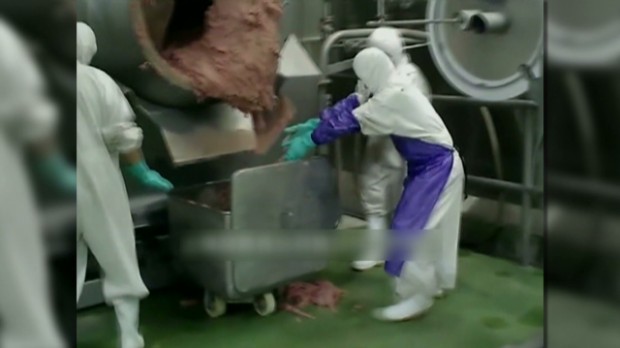
 Luke Sharrett/Bloomberg via Getty Images NEW YORK -- At a dinner McDonald's (MCD) hosted for reporters and bloggers, waiters served cuisine prepared by celebrity chefs using ingredients from the chain's menu. A Kung Pao chicken appetizer was made with Chicken McNuggets doused in sweet-and-sour sauce and garnished with parsley. Slow-cooked beef was served with gnocchi fashioned out of McDonald's french fries and a fruit sauce from its smoothie mix. For dessert, its biscuit mix was used to make a pumpkin spice "biznut," a biscuit-doughnut hybrid. The event, held in New York City's Tribeca neighborhood, was billed "A transforming dining experience of 'fast food' to 'good food served fast.' " Attendees tweeted out photos and the night was written up on various websites. The dishes aren't intended for McDonald's restaurants. Instead, the evening is part of a campaign by McDonald's to shake its reputation for serving cheap, unhealthy food. At a time when Americans are playing closer attention to what they eat, the company is trying to sway public opinion by first reaching out to the reporters, bloggers and other so-called "influencers" who write and speak about McDonald's. It's just one way McDonald's is trying to change its image. In the past 18 months, the chain has introduced the option to substitute egg whites in breakfast sandwiches and rolled out chicken wraps as its first menu item with cucumbers. Last fall, it announced plans to give people the choice of a salad instead of fries in combo meals. And in coming months, mandarins will be offered in Happy Meals, with other fruits being explored as well. McDonald's declined to make an executive available for this story, but CEO Don Thompson said early this year: "We've got to make sure that the food is relevant and that the awareness around McDonald's as a kitchen and a restaurant that cooks and prepares fresh, high quality food is strong and pronounced." The company faces an uphill battle, especially if the past is any indication. The salads it introduced more than a decade ago account for just 2 to 3 percent of sales. And the chain last year discontinued its Fruit & Walnut salad and premium Angus burgers, which analysts said were priced too high for McDonald's customers at around $5. The problem is that some simply people don't consider McDonald's a place to get high quality food, in part because the prices are so low. And while McDonald's has added salads and a yogurt parfait to its menu over the years, Americans are gravitating toward other attributes, like organic produce and meat raised without antibiotics. "People just don't think of McDonald's as having that premium quality," said Sara Senatore, a restaurant industry analyst with Bernstein Research. In some ways, the image McDonald's is battling is ironic, given its reputation for exacting standards with suppliers. Thompson has also noted the ingredients tend to be fresh because restaurants go through them so quickly. "The produce and the products that we have at breakfast and across the menu are fresher than -- no disrespect intended -- what most of you have in your refrigerators," he said at an analyst conference in May. But even that reputation for supply chain rigor was recently tarnished when the chain's longtime supplier was reported to have sold expired meat to its restaurants in China. The Price Conundrum The low-cost burgers, ice cream cones and other food that made McDonald's so popular since it was founded in 1955 have come to define it. And some people can't get over the idea that low prices equal low quality. "It's the whole perception people get when you sell something cheaply," said Richard Adams, who used to own McDonald's restaurants in San Diego and now runs a consulting firm for franchisees. Anne Johnson, for instance, said she eats at McDonald's because she can get a burger, fries and drink for about $5. But Johnson, a New York resident, doesn't think there are any healthy options there. "Basically, it's junk food," she said. Adding to its challenge, McDonald's can't seem to raise prices without driving people away. Pressured by rising costs for beef and other ingredients, the chain tried to move away from the Dollar Menu in 2012 with an "Extra Value Menu" where items were priced at around $2. But customers are apparently righteous about the $1 price point, and the strategy was scrapped. Last year, McDonald's changed its tactic a bit, hoping not to turn off customers. It tweaked the name of the "Dollar Menu" to the "Dollar Menu & More." McDonald's low prices also are part of what keeps it from competing with places such as Chipotle, which is touting the removal of genetically modified ingredients from its menu, and Panera, which recently said it will eliminated all artificial ingredients by 2016. Such moves would be Herculean feats for McDonald's, given its pricing model and the complexity of its menu. Meanwhile, the company acknowledges there are problems with how people perceive its food. "A lot of our guests don't believe our food is real," said Dan Coudreaut, director of culinary innovation at McDonald's, in an interview last year. Taking Control of the Narrative The image of McDonald's food is a growing concern for the company at a time when U.S. sales have been weak for two years. The last time McDonald's managed to boost a monthly sales figure at home was in October, and the company warns its performance isn't expected to improve anytime soon. McDonald's has said it has other problems, including slow and inaccurate service at its restaurants. But improving perceptions about its food is also a priority. Following the dinner in New York last fall, the company hosted a similar event last month for reporters covering the Essence Festival in New Orleans. Beignets filled with grilled chicken and dusted with sugar were served alongside a packet of McDonald's honey mustard sauce. Other "chef events" in local markets are planned for coming months, according to Lisa McComb, a McDonald's spokeswoman. She declined to provide details but said the events will be a spin on a recent contest between two friends to make a gourmet dish out of a Big Mac meal. McComb said McDonald's wasn't associated with that particular contest, which was posted online. The company continues to tweak the menu, too. The new Bacon Club burger McDonald's is promoting comes on a brioche bun and looks more like something that might be found at a trendy burger joint. It costs $5 or $6, depending on where you live, making it the most expensive sandwich on the menu. In Southern California, McDonald's also is testing a "Build Your Own Burger" concept, with the patties being cooked to order more slowly on a separate grill. Beyond the menu, the company is determined to take control of its narrative. "We're going to start really, really telling our story in a much more proactive manner," said Kevin Newell, U.S. brand and strategy officer for McDonald's said late last year. He added that McDonald's has gone too long in "letting other folks frame the story for us."
 Bloomberg News


 3. They are generous with their time and assets. In 1994 Murray and his family gave $1 million to Temple Law School for the renovation of Park Hall, which reopened as Murray H. Shusterman Hall. Last year, Shusterman did more – donating $1.1 million to Temple Law to sponsor a professorship."His commitment and generosity have been an inspiration," law school dean JoAnne Epps is quoted as saying at the time.
 Where's the beef in China? HONG KONG (CNNMoney) A tainted meat scandal that originated in China is now starting to stink up McDonald's sales.